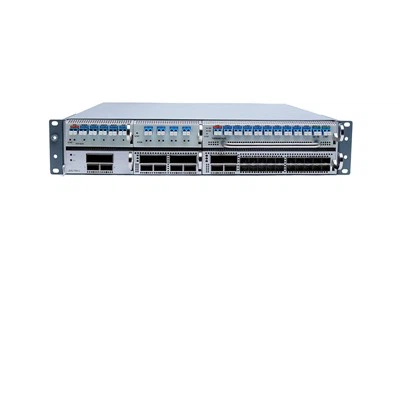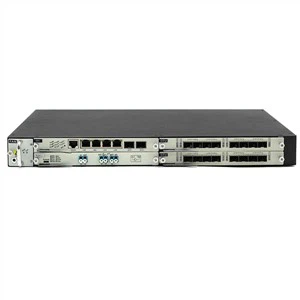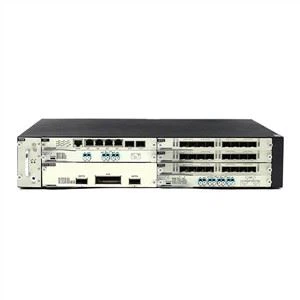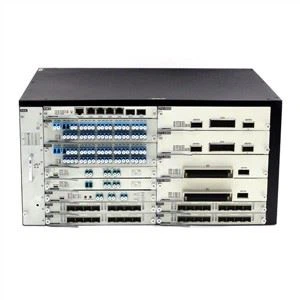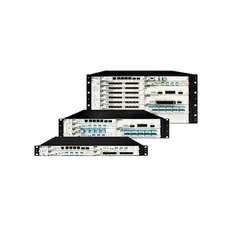
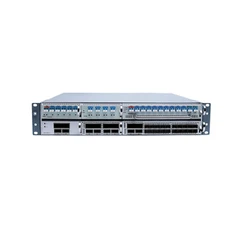

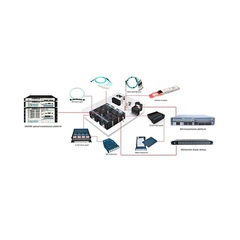


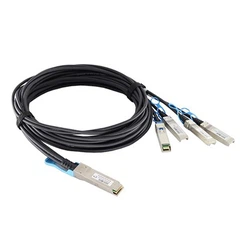
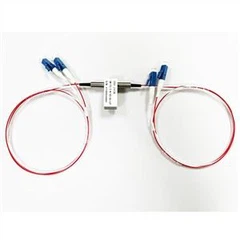
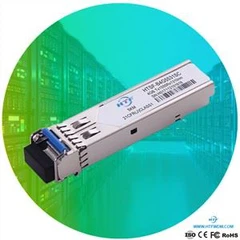


Optical fiber transceiver is a kind of Ethernet transmission media conversion unit which can exchange short-distance twisted pair electrical signal and long-distance optical signal, which is also called fiber converter in many places. Products are generally used in the actual network environment where Ethernet cable cannot be covered and optical fiber must be used to extend the transmission distance, and it is usually located in the access layer application of broadband man; for example, HD video image transmission of monitoring security engineering; at the same time, it also plays a huge role in helping to connect the last kilometer of optical fiber line to man and the outer network.
Basic Features:
1. Provide ultra-low delay data transmission.
2. Completely transparent to network protocol.
3. Special ASIC chip is used to realize data line speed forwarding. Programmable ASIC integrates multiple functions into one chip, which has the advantages of simple design, high reliability and low power consumption, which can make the equipment get higher performance and lower cost.
4. The rack type equipment can provide hot plug function, which is convenient for maintenance and uninterrupted upgrade.
5. Network management equipment can provide network diagnosis, upgrade, status report, abnormal situation report and control functions, and can provide complete
operation log and alarm log.
6. The equipment mostly adopts 1 + 1 power supply design, supports ultra wide power supply voltage, realizes power supply protection and automatic switching.
7. Support ultra wide working temperature range.
8. Support complete transmission distance (0-120km).

Classification of optical fiber transceivers
1. Property classification
Single mode optical fiber transceiver: transmission distance 20 km to 120 km
Multimode fiber transceiver: transmission distance of 2km to 5km
2. Classification required
Single fiber optical fiber transceiver: receiving and transmitting data on one fiber
Dual fiber optical fiber transceiver: receiving and transmitting data on a pair of optical fibers
3. Work level / rate
100M Ethernet optical fiber transceiver: working in physical layer
10 / 100M adaptive Ethernet optical fiber transceiver: working at data link layer
4. Structure classification
Desktop (stand alone) fiber optic transceiver: stand alone client device
Rack type (Modular) optical fiber transceiver: it is installed in 16 slot chassis and adopts centralized power supply mode
5. Classification of power supply
Built in power supply fiber optic transceiver: the built-in switching power supply is carrier level power supply;
External power supply optical fiber transceiver: external transformer power supply is mostly used in civil equipment.
6. Work style classification
Full duplex means that when the data is transmitted and received separately by two different transmission lines, both sides of the communication can send and receive at the same time. This transmission mode is full duplex system. In full duplex mode, the transmitter and receiver are set at each end of the communication system, so that the data can be transmitted in two directions at the same time. The full duplex mode does not need to switch the direction, so there is no time delay caused by the switching operation.
Half duplex refers to the use of the same transmission line for both receiving and sending. Although data can be transmitted in two directions, both sides of the communication can not receive and receive data at the same time. This transmission mode is half duplex system. When half duplex mode is adopted, the transmitter and receiver at each end of the communication system are transferred to the communication line through the receive / transmit switch to switch the direction. Therefore, there will be time delay.
7. Management type classification
Non network management Ethernet optical fiber transceiver: plug and play, through the hardware dial switch to set the electrical interface working mode
Network management Ethernet optical fiber transceiver: support carrier level network management
What is network management optical fiber transceiver?
Network management optical fiber transceiver supports carrier level network management, and can effectively control and maintain in the backbone network and edge network of full network management. It can provide additional network monitoring function, fault detection and remote configuration function. Network managed optical fiber transceiver can be used with network management switch, which can add additional security protection for LAN used to manage intellectual property or financial data. Network management optical fiber transceivers can be easily deployed in the network through a simple network management web interface, and can also be installed in the transceiver rack for centralized management.
What is non network management optical fiber transceiver?
For the novice, the non network management optical fiber transceiver is the most easy to operate network equipment. It has the function of plug and play, which can allow the network equipment to communicate automatically in the network. However, non network management optical fiber transceiver can not provide the same level of monitoring function, fault detection and configuration function as network management optical fiber transceiver. In other words, when there is a fault in the network, you can't check the cause of the fault by accessing the non network management optical fiber transceiver. However, non network management optical fiber transceiver is usually equipped with dip function, which can realize basic configuration such as duplex mode and automatic negotiation.
How to choose between managed and non managed optical fiber transceivers?
Type
| Network management optical fiber transceiver | Non network management optical fiber transceiver |
Characteristic
| Transparent transmission, low latency, support SNMP, VLAN | Fixed configuration - the interface does not support configuration |
Function | Simple network management protocol (SNMP) can be used for remote troubleshooting of network, support DWDM and CWDM wavelength defined by itut, and support loopback test function | Plug and play; limited configuration, such as default QoS function and VLAN; automatic negotiation function |
Security | Provide data, management and control protection functions, high security performance | Basic security settings, security performance is not as high as network management optical fiber transceiver |
Application environment | Data center and large enterprise network | Small and medium-sized enterprise network, home network, laboratory, conference room, etc |
Cost | Low | High |
Although network managed optical fiber transceiver is more expensive than non network managed optical fiber transceiver, network managed optical fiber transceiver is a good choice for better control and monitoring of network traffic.
HTF's products are customized, the quality is guaranteed, and the accessories are imported.
Contact: support@htfuture.com
Skype :sales5_ 1909,WeChat :16635025029