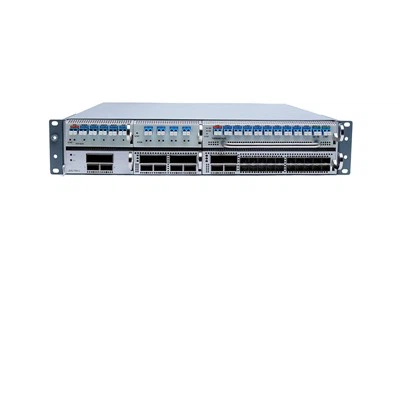





A bureau connects multiple (10-20) trunk optical cross-connects through a trunk optical cable. Each trunk optical cross connects multiple wiring optical cross-connects through a distribution optical cable.
Each wiring optical cross connects multiple (tens of ) Fiber distribution box, each fiber distribution box is connected to multiple (more than ten) users through the optical fiber cable.
This allows a bureau to accommodate tens of thousands of users with only a few outgoing optical cables. The trunk optical cable lines in ODN (the trunk optical cable and the trunk optical interchange) are usually planned and constructed. Usually, a single construction will meet the business needs of a certain area for about 5 years
Wiring optical cable lines and introducing optical cable lines are built according to business needs. The construction of the microgrid is only possible if it has the construction conditions. Due to the limited end-to-end capacity of the trunk/distribution optical cross and the resources of pipelines/rods laid by the optical cable, the inappropriate ratio of the number of trunk optical cross-connects and wiring optical cross-connects will cause a serious imbalance in the utilization rate of optical cable and optical cross-connect resources Therefore, the ratio of the number of trunk optical exchanges to wiring optical exchanges is an important indicator reflecting the health of ODN.
The optical fiber cores of the optical distribution end of the distribution line are divided into broadband service, wireless fronthaul and dedicated line fiber cores according to the types of services accessed. Let's take the residential community as an example to analyze the core requirements of various services.
(1) Introduce optical fiber core
Introduction of optical fiber core is the configuration core of each service introduced into the optical cable.
The number of cores for broadband access is proportional to the number of fiber distribution boxes, usually 2 cores per fiber distribution box. The number of distribution boxes is related to the number of residential units and storey height, and the number of households on each storey.
Front pass cores. Generally, a macro station (36 cores) is considered for every 20 buildings in a multi-storey house, and 6-core room split cores are considered for each building in high-rise and dense high-rise houses.
Demands for leased lines vary greatly in different communities. Generally, only the dedicated line requirements for street buildings are considered. Generally, one dedicated line (6 cores) should be considered for every 10 facades, and each light cross should be no less than 12 cores.
(2) Distribution cable core
The core of the distribution optical cable is the core of the distribution optical cable actually occupied by each service.
The core of broadband access is estimated by "the number of splitter boxes x 1.1/N", where N is the split ratio of the splitter in the distribution optical cross, each splitter box usually only needs 1 core, but There are also less than 10% of the fiber distribution box may occupy 2 cores.
Front pass fiber core, generally a macro station is considered according to the actual occupation of 18 cores; because the RRU/AAU of the room division is usually cascaded, the high-rise and dense high-rise residential rooms are divided into 2 cores per building.
Generally, high-rise and dense high-rise cells need to be equipped with 576-core optical transmission. Commercial buildings, multi-storey residential buildings, and urban suburbs are often equipped with 288-core optical transmission. The ratio of passive WDM for wireless fronthaul is also very high. Therefore, on the whole, it is reasonable to link 4 to 8 wiring optical crosslinks with one trunk optical crosslink.