




In the past few years, the link speed of data center has increased from 25g / 100g to 100g / 400g. After each further leap in bandwidth, there is a brief pause, and then the head of the data center needs to prepare for the next leap. At present, the data center is committed to the leap to 400g. For data center managers, one of the key considerations is which optical communication technology is most appropriate.
400ge optical fiber transceiver
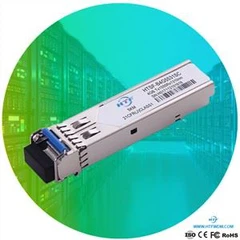
As optical device manufacturers try to occupy a leading position in the data center field, cost and performance will drive the development of 400g optical communication market. In 2017, cfp8 became the first generation 400ge module for core router and DWDM transmission interface. Recently, the focus of the industry has shifted to the second generation 400ge modules: qsfp-dd and OSFP.
Although cfp8, qsfp-dd, and OSFP are all hot swappable, not all 400ge transceiver modules are so, some of which are directly installed on the host printed circuit board. The PCB routing of these embedded transceivers is very short, which can achieve low power consumption and high port density. Although embedded optics have higher bandwidth density and per channel rate, pluggable optics are still favored by the Ethernet industry for its easier maintenance and cost-effectiveness of pay on demand.
Although the details involved in the process of moving to higher speeds are daunting, they also help to examine the process more objectively. With the development of data center services, the speed of storage and server must be improved. To support higher speeds, you need the right transmission media. When choosing the optical module that can best meet the needs of the network, we need to have a long-term vision of "starting from the end". Because the more accurate you predict the services you need and deliver, the better the network can support new and future applications.