


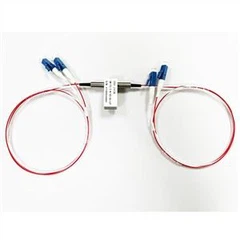
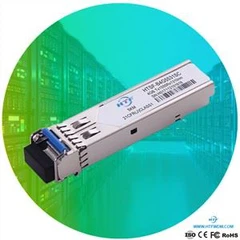


Failure of optical module in normal use can be divided into two cases: transmitter failure and receiver failure of the module. In general, there are two reasons for failure:
1. The optical port of the optical module is polluted and damaged, resulting in the increase of optical link loss, so that the optical fiber link is disconnected. The light will be polluted under the following three conditions: dust entering into the environment caused by long-term exposure of the optical port, optical port pollution caused by the pollution of the optical fiber end face connected by modules, and improper use of the optical connector end face of the tail fiber.
2. The optical module is damaged by ESD, that is, electrostatic discharge. Static electricity will cause dust adsorption, change the impedance between lines, and affect the function and life of THE SFP optical module, such as the use of environmental drying, illegal operation, active fiber equipment without grounding or poor grounding can cause ESD damage.
Usually, we need to eliminate the cause of optical module failure. We have ensured that the equipment can be used normally. The following steps are sorted out for your reference.
1. Check whether the fiber jumper is consistent with the optical module.
Multi-mode fiber jumpers are commonly available in orange, gray and turquoise and these fiber jumpers are printed with 62.5/125U or 50/125U. The single-mode fiber jumper is usually yellow and blue, and the online print is G652D or 9/125U, etc. The fiber module is multi-mode (850nm wavelength) with black ring-pull watch. Other colors are single-mode optical modules

2. Self-loop inspection
The light emitted by the general multi-mode optical module is visible light, which can be observed with the naked eye (please do not look directly at the light port). The light port on the left side of the optical module is red laser, and the light indicates normal operation. However, the light emitted by the single-mode optical module is invisible, so we can connect the transmitter and receiver of the optical module with a jumper. If the switch works, the light is on, it means that it works normally.

3. Port configuration
If the communication still fails, we need to do the following configuration, as an example. At present, some commonly used switch ports are of optoelectronic multiplexing type, and most optical ports are still closed, which need to be opened manually. For the communication between different brands of switches, we also need to force the port rate and working mode to be configured into 1000Mpbs and full-duplex mode

4. Confirm compatibility
It is usually necessary to write the manufacturer information, which is often referred to as compatibility. If the communication still does not work, please confirm whether the optical module is compatible with your device.

Any questions or need? Please contact me.
Doris from HTF will always ready to assist you.
Email:sales2@htfuture.com
Skype:live:sales2_4719
WhatsApp:+8615816873196