


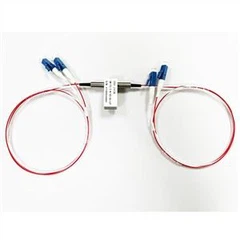
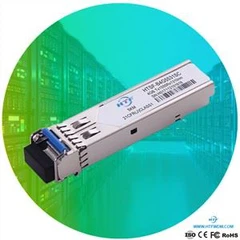


The 25G Ethernet standard is a standard specially launched by the IEEE for servers in cloud data centers in 2016. This standard was launched several years later than the 10G/40G/100G Ethernet standard. The main advantage of 25G is the use of SerDes technology, which is a mainstream time division multiplexing (TDM) and point-to-point (P2P) serial communication technology, which can make full use of the channel capacity of the transmission medium to minimize The required number of transmission channels and device pins can increase the signal transmission rate and greatly reduce the communication cost.
Currently, most of the components used in switches are running SerDes with a clock rate of approximately 10Ghz, which can provide a transmission rate of 10Gbps between different components. In recent years, due to the rapid development of SerDes technology, SerDes with a clock rate of 25Ghz has become one of the economically viable options, which has led to differences in costs and benefits between 10G and 40G and 25G. Such as:
10G VS 25G-It is also a SerDes channel. The throughput provided by 25G is 2.5 times higher than that provided by 10G. When the 10G network is upgraded to 25G, since the 25G SFP28 optical module can use the LC jumper used in the 10G network wiring, there is no need to rewiring, so it can effectively save costs.
40G VS 25G-40G uses 4 10Gbps Fibre Channels (SerDes with a clock rate of 12.5Ghz), and 25G uses a single SerDes channel, so 25G can provide higher port density. At the same time, since most 40G QSFP+ optical modules on the market need to be used with MTP/MPO patch cords, 10G-40G will inevitably increase cable costs.