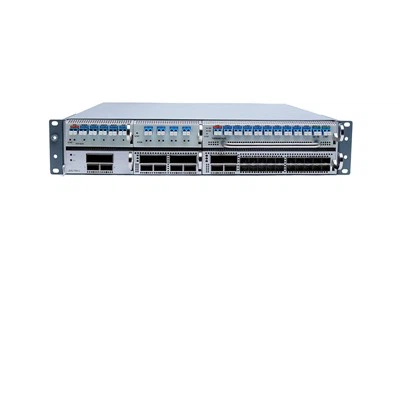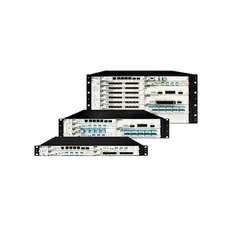
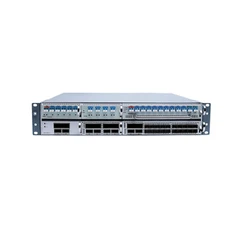

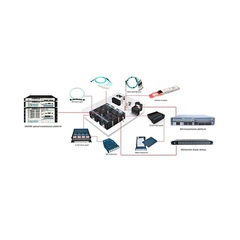




5G bearer network architecture---5G bearer network is the basic network that provides network connection for 5G wireless access network and core network.
With the proposal of 5G technology, various industrial platforms at home and abroad have begun to study 5G optical module technology. Optical module is the basic unit to realize photoelectric conversion in 5G network. It is widely used in wireless and transmission equipment, and is an important part of 5G construction. The capital pressure of 5G construction leads to cost sensitivity, and the cost of optical module accounts for more than 50% of 5G forward transmission equipment. The 25 Gbit / s BIDI technology research has the advantages of saving 50% optical fiber resources and high-precision time synchronization, which meets the needs of 5G business. It can also use the 1330 nm and 1270 nm uplink and downlink wavelength combination scheme widely used in the industry in the 10 Gbit / s era. It has high maturity of the industrial chain and is convenient for the rapid industrialization of products. The standardization of 25 Gbit / s BIDI optical modules has been completed rapidly, which has guided the industrialization process of optical module manufacturers.
Technical scheme of 5G bearer network
It can be seen from the above that 5G bearer network is divided into three parts: forward transmission, intermediate transmission and return transmission. The application of each part is different, and its technical scheme and demand for 5G optical module are also different. The details are as follows:
5G forward
With the further development of 5G, the shortage of optical fiber resources will gradually become prominent. Therefore, the industry is developing various WDM solutions. The forward transmission scheme mainly includes traditional optical fiber direct drive scheme, active WDM / OTN scheme, passive WDM scheme and semi-active WDM scheme.

It has become a comprehensive choice based on the industry's multi-function, such as the construction of semi functional scenarios. In this scenario, there are four schemes according to the different wavelengths.
1. DWDM: refer to ITU-T g.698.4, channel spacing is 100GHz and 50GHz, supporting 40 / 80 wavelengths.
2. CWDM: refer to ITU-T g.694.2, with channel spacing of 20 nm and support of 18 wavelengths.
3. LWDM: refer to IEEE 802.3, channel spacing is 800 GHz, and 12 wavelengths are supported after expansion.
4. MWDM: Based on CWDM, the wavelength is shifted to the left and right, and the non-uniform wavelength interval is adopted to support 12 wavelengths.
In the early stage of 5G forward deployment, considering the cost, some 5G network service providers may adopt 10Gbit / s optical module for network deployment. However, due to the limitation of module speed, the industry now prefers 25Gbit / s optical module, that is to say, 25Gbit / s and 100Gbit / s will be the main optical modules of 5G forward network. The table below shows 5G front light transmission module.
Rate | Package | Transmission distance | Working wavelength | Modulation format | Optical chip |
25Gbit/s | SFP28 | 70~100 meters | 850nm | NRZ | VCSEL+PIN |
SFP28 | 300 meters | 1310nm | NRZ | FP/DFB+PIN | |
SFP28 | 10 kilometers | 1310nm | NRZ | DFB+PIN | |
SFP28 BIDI | 10/15/20 kilometers | 1270/1330nm | NRZ/PAM4 | DFB+PIN/APD | |
SFP28 | 10 kilometers | CWDM | NRZ | DFB+PIN | |
Adjustable SFP28 | 10/20 kilometers | DWDM | NRZ | EML+PIN | |
100Gbit/s | QSFP28 | 70~100 meters | 850nm | NRZ | VCSELs+PINs |
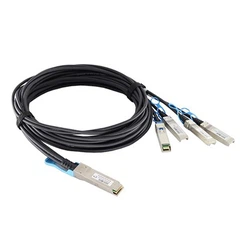
QSFP28 | 10 kilometers | 4WDM-10 | NRZ | DFBs+PINs | |
QSFP28 | 10 kilometers | 1310nm | PAM4/DMT | EML+PIN | |
QSFP28 BIDI | 10 kilometers | CWDM4 | NRZ | DFBs+PINs |
Note: all optical modules mentioned above shall meet the reliability requirements of industrial temperature (- 40 ℃ ~ + 85 ℃) and dustproof.
25 Gbit/s DWDM scheme includes two different implementation methods: one is to use wavelength tunable optical module, which has the advantages of port independent and wavelength adaptive. The wavelength tunable range includes 6-wave, 12-wave, 20-wave and 40-wave. One optical module can meet the requirements of all application scenarios, but the high cost of tunable optical module becomes the bottleneck of its promotion and application in 5G forward transmission; the other is that the high cost of tunable optical module is the bottleneck of its promotion and application in 5G forward transmission Using fixed wavelength optical module, the scheme can also support 48 wave / 96 wave, but the overall operation and maintenance is more complex.

5G medium transmission and return technical scheme
Since 5G intermediate transmission and return have basically the same requirements in bandwidth, networking flexibility and network slicing, the same technical scheme can be adopted for 5G intermediate transmission and return. At present, it mainly focuses on IPRAN (IP based wireless access network), PTN, OTN and other technical applications, among which IPRAN is more economical and practical.
In addition, 5G intermediate transmission and return cover the access layer, convergence layer and core layer of man. The optical module used in the man has little difference with the optical module technology used in the existing transmission network and data center. The metropolitan access layer will mainly use gray light module or color light module with the speed of 25Gbit / s, 50gbit / s and 100Gbit / s, while the Metro convergence layer and core layer will mainly adopt the optical module technology DWDM color light modules with 100 Gbit / s, 200 Gbit / s and 400 Gbit / s are used. In other words, 5G medium transmission and return will be mainly based on 25 / 50 / 100 / 200 / 400 Gbit / s optical modules. The table below shows 5G medium and return optical modules.
Rate | Package | Transmission distance | Working wavelength | Modulation format | Optical chip |
25Gbit/s | SFP28 | 40 kilometers | 1310nm | NRZ | EML+APD |
| 50Gbit/s | QSFP28/SFP56 | 10 kilometers | 1310nm | PAM4 | EML/DFB+PIN |
QSFP28 BiDi | 10 kilometers | 1270/1330nm | PAM4 | EML/DFB+PIN | |
QSFP28/SFP56 | 40 kilometers | 1330nm | PAM4 | EML+APD | |
QSFP28 BiDi | 40 kilometers | 1295.56/1309.14nm | PAM4 | EML+APD | |
| 100Gbit/s | QSFP28 | 10 kilometers | CWDM/LWDM | NRZ | DFBs/EMLs+PINs |
QSFP28 | 10/20 kilometers | LWDM | NRZ | EMLs+APDs | |
QSFP28 | 40 kilometers | DWDM | PAM4/DMT | EMLs+PINs | |
| 100/200/400Gbit/s | CFP2-DCO | 80-120 kilometers | DWDM | PM QPSK/8-QAM/16-QAM | IC-TROSA+ITLA |
| 200/400Gbit/s | OSFP/QSFP-DD | 2/10 kilometers | LWDM | NRZ | EMLs+PINs |
With the official commercial use of 5g network, 5g will become a key milestone in the history of network communication. 5g forward transmission, intermediate transmission and return transmission have different requirements for new optical modules. At present, there are many optical module technology solutions and types in each application scenario.
HTF's optical fiber patchcords are customized, the quality is guaranteed, and the accessories are imported.
Contact: support@htfuture.com
Skype :sales5_ 1909,WeChat :16635025029