




Working principle of BiDi optical module
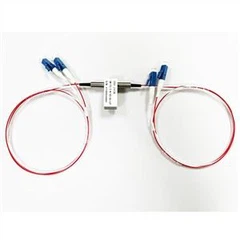
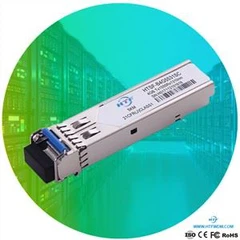
BiDi optical modules are equipped with wavelength division multiplexing (WDM) couplers (also called duplexers), which can couple and separate data transmitted by a single fiber. In order to operate effectively, the BiDi optical modules must be paired and the operating wavelengths of the two duplexers must match. For example, the paired BIDI optical module is connected to device A (upstream) and device B (downstream). The duplexer of module A must have a reception wavelength of 1550 nm and an emission wavelength of 1310 nm, and the duplexer of optical module B must have a reception wavelength of 1310 nm and an emission wavelength of 1550 nm. Then, by tuning the duplexer to match the desired wavelength of the transmitter and receiver, the two-way data transmission is realized.
Advantages of BiDi optical module
The use of BiDi optical modules can reduce the number of ports on the fiber patch panel and the space dedicated to the fiber management tray, while also reducing the number of optical cables required and reducing the cost of fiber cabling infrastructure. Although the price of BiDi optical modules is higher than that of traditional dual-fiber bidirectional optical modules, the number of optical fibers used per unit transmission distance is indeed half of that of traditional dual-fiber bidirectional optical modules. For network deployment, the use of fewer optical fibers saves The cost far exceeds the price of BiDi optical module.