


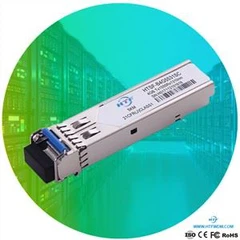


1. Optical modules are accessories, generally only used in switches and devices with optical module slots; optical fiber transceivers can be used alone.
2. The optical module supports hot swap and flexible configuration; the optical fiber transceiver belongs to fixed specifications, and it is difficult to replace and upgrade.
3. The optical module is powered by supporting equipment; the optical fiber transceiver has a separate power supply.
What do I need to pay attention to when pairing an optical module with an optical fiber transceiver?
Optical modules are functional modules and cannot be used alone. In the design of optical fiber network structures, we often use optical fiber transceivers and optical modules together. Next, let's take a look at what needs to be noted when pairing optical fiber transceivers with optical modules?
1. The wavelength and transmission distance must be the same, for example, both use 1310nm or 850nm wavelength, and the transmission distance is 10KM.
2. It is necessary to pay attention to the selection of the fiber jumper pigtail interface. Generally, the SC port used by the optical fiber transceiver and the LC port are used by the optical module.
3. The rate of the optical fiber transceiver and the optical module must be the same. For example, the Gigabit transceiver corresponds to a 1.25G optical module, 100M to 100M, and Giga to 100M.
4. The type of optical module needs to be the same, single fiber to single fiber, dual fiber to dual fiber.