




After nearly 30 years of rapid development, the traditional generic cabling system has gradually failed to meet the development needs of the times; the infrastructure network construction of large-scale parks and buildings mainly faces the following challenges:
·A large number of switches occupy the room space, with high power consumption and difficult heat dissipation
·The connection between converging routers is complex, and takes up pipeline space, so it is difficult to route and maintain
·Switch location is scattered and management is complex, requiring a large maintenance team
·Limitation of transmission distance
·Complex operation of new network equipment
·Difficult to upgrade and expand
For the transmission distance, smooth network upgrading, high reliability, flexible networking, easy deployment, simple operation and maintenance, the traditional generic cabling system has completely lagged behind the all-optical network (POL). The all-optical network integrates the transmission of traditional generic cabling and optical fiber to desktop, optical fiber to user unit, optical fiber to public area as a whole.
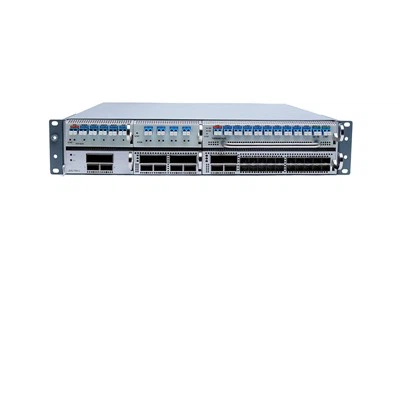
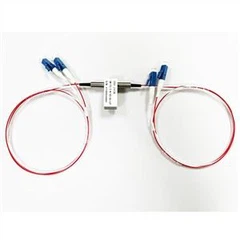
In POL network, the convergence switch in traditional LAN is replaced by OLT; the horizontal copper cable is replaced by optical fiber; the access switch is replaced by passive optical splitter; ONU provides two / three-layer function, which can access users' data, voice and video services through wire or wireless.
PON network downlink adopts broadcast mode: the optical signal sent by OLT is divided into multiple optical signals with the same information and transmitted to each ONU through the optical splitter; ONU selectively receives its own message according to the tag in the message and discards the one with inconsistent tag.
Uplink direction of PON network: OLT side is uniformly allocated to each ONU with a time slice. ONU sends signals strictly according to this time slice window, and does not belong to its own time slice to shut down the optical port. The scheduling mechanism of uplink time window highly relies on PON's ranging technology.
The understanding of the principle of PON technology is helpful for us to apply this technology more skillfully in the electrical design, especially the passive (no power supply) characteristics of its optical distribution network, especially the point to point distribution design caused by the difference with the traditional switch. In order to ensure the transmission of two direction traffic packets on one core fiber, PON adopts wavelength division mode; after developing to 10 Gigabit PON, four wavelength segments are actually used for optical fiber multiplexing.