




In the era of artificial intelligence, data centers have evolved from simple storage hubs into the beating hearts of digital civilization. Every AI model, from ChatGPT to autonomous driving algorithms, depends on massive data movement between compute clusters. Training a single large-scale model can require hundreds of petabytes of data exchange across distributed nodes, and these nodes are often separated by hundreds of kilometers. In such an environment, the performance of the Data Center Interconnect (DCI) layer determines the efficiency of the entire AI infrastructure.
Yet while data volumes are growing exponentially, the networks connecting data centers are under unprecedented strain. Industry studies show that AI workloads will consume more than 50% of global data-center bandwidth by 2026, while traditional DCI infrastructures-built for generic cloud traffic-are ill-equipped to handle such enormous throughput, real-time latency requirements, and energy efficiency demands.
1 The New Challenges of the AI-Driven World
AI data centers are not just larger; they are fundamentally different. They demand:
Massive East-West traffic between GPUs and storage clusters, where bandwidth utilization exceeds 90% for long periods.
Ultra-low latency (<50 μs) connections to synchronize model parameters across nodes.
Elastic scalability, as compute nodes expand dynamically to handle different AI training phases.
Energy optimization, since large AI facilities can consume more than 100 MW-equivalent to a small city.
However, most legacy interconnect solutions suffer from high optical power loss, limited channel counts, and rigid architectures. Operators face bottlenecks in upgrading existing links without downtime. The cost and complexity of scaling from 100G to 400G or 800G DCI links further amplify these concerns.
2 Market Needs: Smarter, Faster, and Greener DCI
To meet the AI era's growing demands, global operators are prioritizing four goals:
Bandwidth Density: Increase transmission capacity per rack unit while minimizing footprint.
Agility: Simplify deployment and maintenance across multi-site data centers.
Reliability: Ensure 99.999% availability for mission-critical AI and cloud workloads.
Sustainability: Reduce energy use and carbon footprint per transmitted bit.
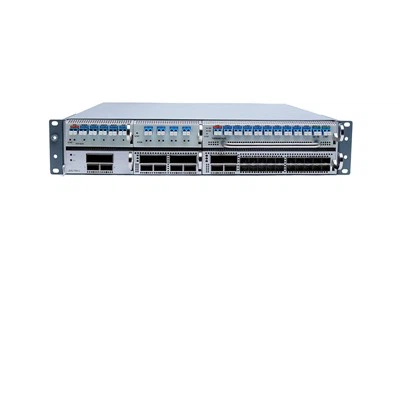
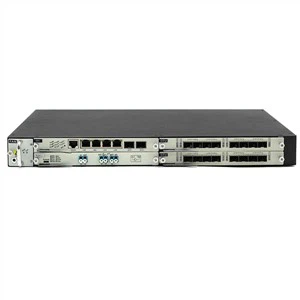
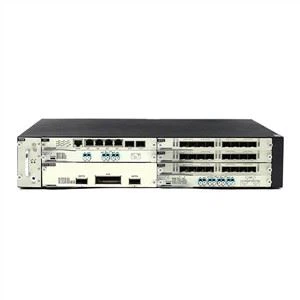
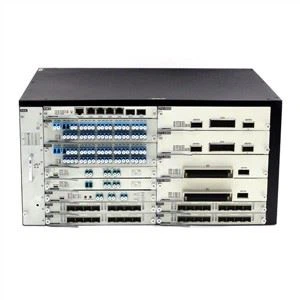
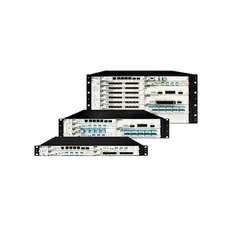
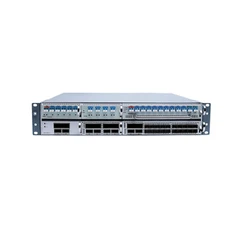
These requirements call for a DCI platform that combines optical innovation, intelligent control, and high modular scalability-a trifecta embodied by the HTF HT6000 5U Transmission Platform.
3 The HTF Solution: Redefining High-Performance DCI
Ultra-High Capacity with Modular Scalability
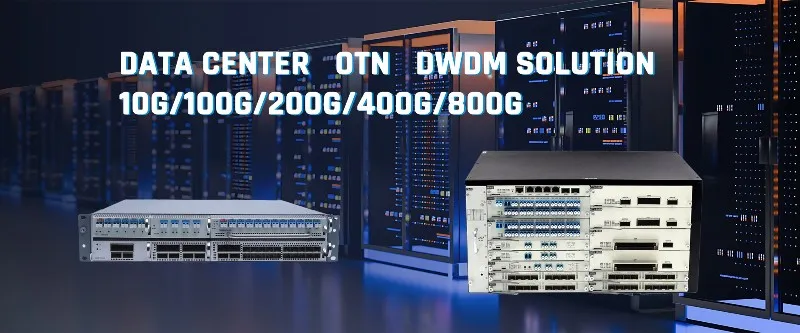
The HT6000 supports up to 96×100 G (9.6 Tbps) per chassis and can seamlessly scale beyond 16 Tbps in a unified DWDM/OTN architecture. By adopting multi-rate transponders (1.25 G‑100 G), it easily adapts to the hybrid environments of AI and traditional cloud data centers. Its QSFP28/CFP2 pluggable design allows hot-swapping between different capacity tiers, future-proofing DCI expansion without physical re-cabling.

DWDM-Enabled Long-Distance DCI
For geographically dispersed AI data centers, the platform integrates EDFA optical amplification and DCM dispersion-compensation modules, ensuring stable, high-speed transmission over distances exceeding 1,500 km. Even across metropolitan or inter-city backbones, the HT6000 guarantees consistent optical performance and low jitter, meeting the stringent synchronization needs of GPU clusters and AI pipelines.
Intelligent Network Management
The built-in EMS (Element Management System) provides a comprehensive view of every node, link, and wavelength in real time. Operators can configure, monitor, and optimize DCI links through a web-based GUI, with intelligent alarms, automatic bandwidth allocation, and predictive analytics for fault prevention. The system's AI-driven management algorithms further enhance resource utilization and traffic balance.
Green Efficiency by Design
Every watt counts in the AI era. The HT6000's dual power supply (AC 220 V/DC -48 V) and adaptive cooling reduce energy consumption by up to 35% compared with conventional chassis systems. Compact 5U construction saves 40% of rack space, lowering total energy and HVAC costs across large data-center campuses.
4 Bridging AI Infrastructure with Confidence
HTFuture's HT6000 platform has been widely deployed by ISPs, colocation providers, and hyperscale cloud operators who need reliable interconnection between AI clusters, storage arrays, and user-facing applications. Typical topologies include:
Metro DCI Rings: 40–80 km loops interconnecting urban data centers with high redundancy.
Regional DCI Networks: 200–600 km connections between Tier 2 and Tier 3 facilities.
Inter-City AI Links: Over 1,000 km long-haul routes connecting training centers with data lakes and backup nodes.
Across all scenarios, the HT6000 ensures that data moves securely, efficiently, and predictably-so that AI applications, cloud workloads, and content delivery systems operate without bottlenecks.
5 Measurable Business Impact
Real-world results speak volumes:
60% improvement in AI data synchronization speed, enabling faster model training cycles.
50% reduction in deployment time, thanks to plug-and-play service modules.
40% lower energy consumption per Gbps, enhancing sustainability metrics.
99.999% network uptime, achieved through dual OLP protection and real-time monitoring.
For global enterprises, these advantages translate directly into higher service availability, lower operational expenditure, and faster time-to-market for new digital services.
6 Aligning with the Future of AI Networking
As AI continues to reshape industries-from autonomous vehicles to biotech simulations-the backbone of innovation will lie in seamless data-center interconnectivity. Future DCI networks will require even higher capacities (400G/800G), automated wavelength orchestration, and AI-assisted self-healing mechanisms.
The HT6000 platform's open line system compatibility and software-defined architecture make it ready for such evolution. Its ability to integrate coherent optical modules, flexible grid technologies, and NMS/SDN orchestration tools ensures a smooth migration toward next-generation optical networks.
7 Why Leading Operators Choose HTFuture
Proven Expertise: 10 years of optical-communication R&D and large-scale deployments.
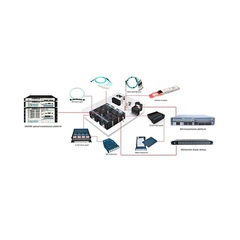
End-to-End Integration: From OTN chassis to amplifiers, MUX/DEMUX, and protection modules.
Customized Solutions: Tailored link design and wavelength planning for specific DCI topologies.
In short, the HT6000 5U Transmission Platform is not just hardware-it is the engine of intelligent connectivity that empowers enterprises to build AI-ready data infrastructures.
The future of data interconnectivity belongs to networks that are intelligent, scalable, and energy-aware. The HTF HT6000 enables cloud providers, hyperscalers, and research institutions to extend their data-center reach while maintaining optimal efficiency and resilience.
By combining DWDM innovation, HTFuture is helping the world's most ambitious data centers move beyond boundaries-interconnecting knowledge, accelerating intelligence, and shaping the digital future of the AI age.