




When the network enters a new cycle driven by computation and data, national and provincial backbone optical transport networks are under unprecedented pressure. Cloud services are consolidating, AI training and data traffic are exploding, and cross-regional trunk lines must carry larger bandwidths while ensuring higher stability and continuity. For operators, upgrading the backbone is no longer a simple capacity expansion but a strategic choice for the coming years: whether the platform is stable enough, easy to evolve, and able to lower long-term operational costs will determine the lifecycle value of the entire network.

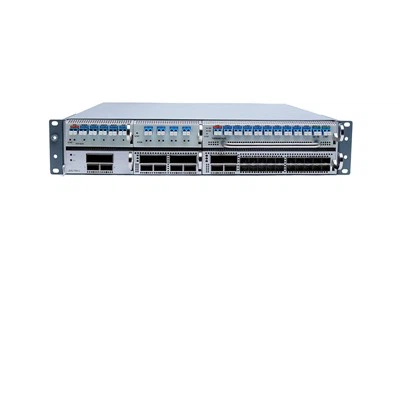
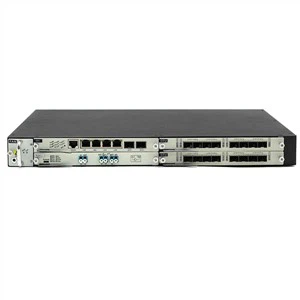
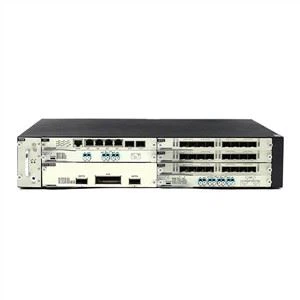
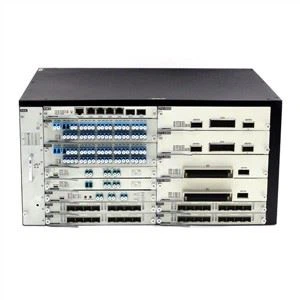
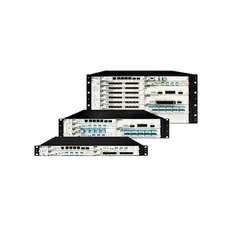
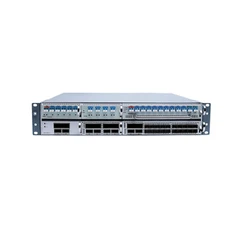
HT6800-6.4T DCI DWDM Transmission Platform is designed for the "long-term evolution" of backbone-grade networks. With large-capacity carrying capability, long-distance transmission adaptation, and multi-dimensional operation and maintenance management, it offers a more certain transmission foundation for national backbones, provincial backbones, and regional core hubs.
The essence of upgrading backbone networks is the pursuit of certainty
The greatest value of a backbone network lies in continuous cross-regional transmission, and the prerequisite for continuous transmission is certainty. Capacity growth needs certainty, link stability needs certainty, and operational efficiency needs certainty. The old way of adding boxes to expand capacity often leads to structural bloat and cost escalation under today's business density and network complexity. A clearer trend is forming: backbone networks need a platform-based carrying method to support greater growth with less complexity.
Addressing the demand of 16T-level nodes and beyond so expansions no longer require rebuilding
The core nodes of backbone networks are quickly moving into the era of 16T-level capacity and above. The real challenge is not just whether we can carry today's traffic but whether future business growth can be smoothly upgraded on the same architecture. HT6800-6.4T emphasizes a platformized and high-density carrying approach, helping operators plan trunks and core nodes more robustly, turning capacity evolution from reactive patching into a predictable roadmap.
Serving cross-provincial trunks and long-distance links to keep "long distance" running steadily
Backbone networks have long links, multiple domains, and long running cycles, so any instability is magnified and any maintenance touches the entire network. HT6800-6.4T focuses on long-distance DWDM transmission scenarios, emphasizing reliable operation and continuous online capability, making it suitable for national trunks, provincial backbones, and key regional interconnects. For backbone networks, stability is not just a slogan but a capability that must be engineered.

Upgrading the operations system of backbone networks to turn networks from device management into an operable asset
The larger the backbone, the more operational modes determine cost structures. HT6800-6.4T supports multiple management and maintenance methods, providing more convenient O&M entrances and a more unified management experience. More importantly, it helps operators shift operations from experience-driven to system-driven, making fault localization more efficient, daily maintenance lighter, and expansion onboarding more controllable. Over time, this improvement in operational efficiency translates directly into measurable long-term benefits.
The key to choosing a backbone-grade platform is not higher parameters but "long-term savings"
In the backbone field, the truly expensive part is never a single procurement but the long-term O&M, repeated expansions, and hidden costs of multiple platforms. A backbone-grade platform should have a longer lifecycle, more stable running performance, and a more sustainable evolution capability. HT6800-6.4T's core value is to unify "high capacity, long distance, easy O&M" into the same platform logic, turning backbone network construction from a phased project into the operation of a long-term asset.
Lowering the cost per bit so bandwidth growth no longer means runaway costs
When bandwidth growth becomes the norm, operators care most about whether the cost per bit is controllable. HT6800-6.4T, through a more platformized carrying method and a design focused on backbone applications, helps backbone networks support business growth at more reasonable costs. Rather than increasing complexity during expansion, it is better to flatten the cost curve at the starting point with a more suitable foundation.
Making upgrades smoother so network capabilities keep up with business rhythm
The upgrade pace of backbone networks is accelerating while construction windows are shortening. HT6800-6.4T emphasizes the continuity of evolution and the consistency of management, enabling the network to iterate more smoothly when facing new business rollouts, link adjustments, and node expansions, thereby reducing the impact on existing services and enhancing overall network resilience.
Preparing for the future backbone with a stable foundation starting today
The future competition of backbone networks is essentially about who can carry growth more stably. As AI and cloud services bring continuous bandwidth demands, backbone networks must have long-term evolution capability and controllable cost structures. HT6800-6.4T, with backbone-grade stability, adaptation to long-distance transmission, and a more efficient O&M experience, provides a more reliable foundation choice for national and provincial backbone optical transport networks.
The upgrade of backbone networks should not be a series of passive expansions but a sustainable evolution path. HT6800-6.4T makes each growth more stable, more economical, and more confident.