




Every generation of Ethernet reshapes the industry's cadence. From 100G to 400G to 800G, it wasn't concepts that pushed the industry forward but validation-whichever players could turn standards into stable, scalable systems first gained more influence in the next‑generation network. Today, 1600G Ethernet stands at a similar threshold: standards are progressing, chips are advancing, system proposals are forming, yet the real world only trusts one thing-whether the link is stable, measurable and repeatable.

Moving from paper specifications to deployable networks, validation is the critical last mile for 1600G. In the lab it isn't unusual to demonstrate higher speeds; what's scarce is system‑level usability. At 1600G, challenges arise not only from the rate itself but from multi‑dimensional coordination: electrical interfaces, optical interfaces, module thermal design, platform compatibility, management, monitoring, error rates and jitter. Any instability in these areas leaves "standard support" stranded in a slide deck. Device manufacturers, operators and researchers therefore urgently need not another trend talk but a 1.6T optical module that supports real validation processes, so tests, interoperability, tuning and pilots can genuinely proceed.
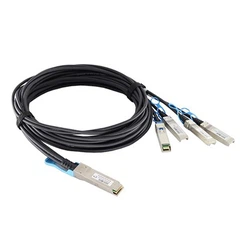
The 1.6T OSFP‑XD 2×FR4 isn't an isolated component; it's a pivotal interface in the 1600G ecosystem. Designed for the OSFP‑XD form factor and aligned with 1600G Ethernet specifications, it suits laboratory verification, platform interoperability, port testing and trial deployment. To R&D teams it offers a "testable real interface"; to operators it provides an "assessable evolution path"; to integrators it signals a "plannable product roadmap". When a system can be validated, it earns the right to be replicated at scale.

For switch and router vendors, 1600G port validation is the starting gun for the next product cycle. Completing interoperability tests earlier yields reliable system design experience that feeds back into hardware architecture, thermal strategies and software management. For operators and large network owners, the question isn't whether to adopt 1600G, but when, how and how to do it steadily. Early testing lets risks stay in controlled environments and benefits stay in the commercial network. For universities and research institutions, 1600G verification platforms are themselves the carriers of frontier research, enabling exploration into higher‑bandwidth interconnects, data center network structures, electro‑optic co‑design and observability.

In the networking industry, standards are the common language, but validation is the real gatekeeper. Whoever can run the standards end‑to‑end is closer to defining the best practices for the next‑generation network. The value of the 1.6T OSFP‑XD 2×FR4 lies in transforming 1600G from a "trend" into an "actionable engineering path": measurable, runnable and reusable. This is how the ecosystem matures.
The 1600G Ethernet era isn't an endpoint but the starting line for a new round of network competition. As the 1600G deployment window opens, the most important thing is not to wait for a clearer future, but to actively shape it using valid products, reproducible methods and iterative data. The 1.6T OSFP‑XD 2×FR4 ensures that the 1600G standard no longer stays on paper but becomes the foundation of truly deployable next‑generation networks.