




The types of optical modules such as SFP, SFP +, SFP28, QSFP + and QSFP28 are not unfamiliar to professionals. These hot plug modules can be used to connect network switches and other network devices (such as servers or transceivers) for data transmission.
Before making clear the differences between these modules, we need to know what are the modules of SFP, SFP +, SFP28, QSFP and QSFP28. We will introduce these modules respectively.
SFP
SFP can be understood as the upgraded version of GBIC. Its volume is only half of GBIC module, which greatly increases the port density of network equipment. In addition, the data transmission rate of SFPs ranges from 100Mbps to 4Gbps.
SFP+
SFP + is an enhanced version of SFP, which supports 8GBIT / s fiber channel, 10G Ethernet and otu2. In addition, the direct connection cable (i.e. SFP + DAC high-speed cable and AOC active optical cable) can connect two SFP + ports without adding additional optical modules and cables (network cable or optical fiber jumper), which is a good choice for the direct connection of two adjacent short distance network switches.
SFP28
SFP28 is an enhanced version of SFP +, which has the same size as SFP +, but can support single channel 25Gb / s rate. SFP28 provides an efficient solution for upgrading 10G-25G-100G network, which can meet the continuous growth of the next generation data center network.
QSFP+
QSFP + is an upgraded version of QSFP. QSFP can support four channels at the same time, and the data rate of each channel is 1GBIT / s, but QSFP + is different from QSFP. It supports 4 × 10Gbit / s channel transmission, and can realize 40Gbps transmission rate through four channels. Compared with SFP +, the transmission rate of QSFP + optical module can reach four times of that of SFP + optical module. When deploying 40G network, QSFP + optical module can be used directly, which can effectively save cost and improve port density.
QSFP28
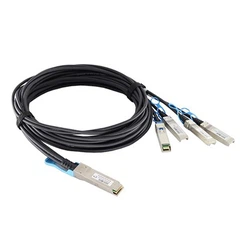
QSFP28 is designed to meet the requirements of 100G applications. There are four high-speed differential signal channels, and the transmission rate of each channel ranges from 25Gbps to 40Gbps. It can meet the application requirements of 100G Ethernet (4 × 25Gbps) and EDR Infiniband. There are many types of QSFP28 products, and there are different ways to realize 100G transmission, such as 100G direct connection, 100G to 4-way 25G branch link or 100G to 2-way 50G branch link.
Differences and similarities of SFP, SFP +, SFP28, QSFP +, QSFP28
After understanding what is SFP, SFP +, SFP28, QSFP +, QSFP28, we will introduce the specific similarities and differences between the two.
SFPs and SFPs +: same size, different speed and compatibility
Since the size and appearance of the SFPs and the SFPs + modules are the same, the equipment manufacturers can adopt the physical design of the SFPs on the switches with the SFPs + ports. Due to the same size, many customers use the SFP module on the switch's SFP + port. This operation is feasible, but the speed will be reduced to 1GBIT / s. In addition, it should be noted that the SFP + module cannot be used in the SFP slot, otherwise the port or module may be damaged. In addition to the difference in compatibility, the transmission rates and standards of SFPs and SFPs + are also different. SFPs can transmit 4GBIT / s at most, and SFPs + can transmit 10Gbit / s at most; SFPs are based on SFF -8472 protocol, while SFPs + are based on sff-8431 and SFF-8432 protocol.
SFP28 and SFP +: SFP28 optical module can be used in the SFP + port
As mentioned above, SFP28 is an upgraded version of SFP +, both of which have the same size but different transmission rates. The transmission rate of SFP + is 10Gbit / s, and that of SFP28 is 25Gbit / s. If the optical module is inserted into the SFP28 port, the link transmission rate is 10Gbit / s, and vice versa. In addition, the bandwidth of SFP28 direct copper cable is higher than that of SFP + direct copper cable, and the loss is lower.
SFP28 and QSFP28: different protocol standards
Although both SFP28 and QSFP28 carry the number "28", their sizes and protocol standards are different. SFP28 supports 25Gbit / s single channel and QSFP28 supports four 25Gbit / s channels. Both of them can be used in 100G network, but the use mode is different. QSFP28 can realize 100G transmission through the three ways mentioned above, but SFP28 needs to rely on the branch high-speed cable from QSFP28 to SFP28.
QSFP and QSFP28: different rates, different applications
QSFP + and QSFP28 optical modules have the same size and have four integrated transmit and receive channels. In addition, although QSFP + and QSFP28 series products also have optical modules and DAC / AOC high-speed cables, the rates are different. QSFP + module supports 40Gbit / s single channel rate, and QSFP + DAC / AOC supports 4 × 10Gbit / s transmission rate. The QSFP28 module transmits data at the rate of 100Gbit / s, and the QSFP28 DAC / AOC supports 4 × 25Gbit / s or 2 × 50Gbit / s. It should be noted that QSFP28 module can’t be used for 10G branch link, but if the switch with QSFP28 port supports QSFP + module, QSFP + module can be inserted into QSFP28 port to realize 4 × 10G branch link.
HTF's products quality is guaranteed, and the accessories are imported.
Contact: support@htfuture.com
Skype :sales5_ 1909,WeChat :16635025029