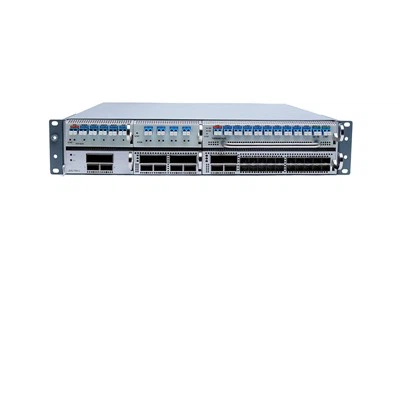



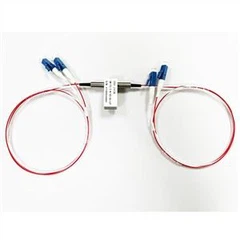
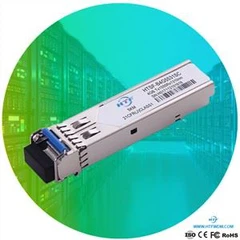


In recent years, you can see the trace of the optoelectronic module everywhere in the data center machine room, such as the large-scale enterprise integrated wiring system, efficient network system and monitoring system. What is the optoelectronic module?
What is the photoelectric module?
The optoelectronic module is also known as the electrical interface module, whose interface type is RJ45. The optoelectronic module is a kind of module that supports hot plug. The package types are SFP, SFP+, GBIC, etc. According to the different speed, the optoelectronic module is divided into 100 megabit optoelectronic module, gigabit optoelectronic module, 10 gigabit optoelectronic module and adaptive optoelectronic module, among which the gigabit optoelectronic module and 10 gigabit optoelectronic module are most widely used.
1. Introduction to gigabit optoelectronic module
As the name implies, the transmission rate of the gigabit optoelectronic module (i.e. 1000Base SFP port module) is 1000Mbps, which is widely used in gigabit Ethernet. The difference between the gigabit light conversion module and the gigabit light module is that the one end of the gigabit light conversion module adopts an electrical port (RJ45), whose interface is connected with a network cable. At one end of the gigabit module is the optical port, which is connected with a jumper. The gigabit optoelectronic module has good conduction performance and self-locking function, which can effectively prevent the loose and falling off of the connecting network cable.
2. Introduction to the 10 gigabit optoelectronic module
10G SFP + power module as the name implies the transfer rate of 10G, this module specially designed for high-speed communication link, relative to the average light module, 10 gigabit light turn electricity module power consumption is half of ordinary light module, and stable performance, can be realized through the cable 10 g transmission network, widely used in 10 gigabit Ethernet.
One might ask what about adaptive optoelectronic modules? The adaptive optoelectronic module is a module that integrates 10/100/1000base three rates into a CMOS chip and can be applied to high-speed Ethernet and gigabit Ethernet. The 100 Megabyte optoelectronic module will not be explained much here. The principle is the same as that of the gigabit optoelectronic module and the 10 Megabyte optoelectronic module. With the high bandwidth requirements of the data center, the 100 Megabyte optoelectronic module will gradually fade out of the market in the future.
Hot questions and answers about the optoelectronic module
1、Q: Can the 10 gigabit optoelectronic module be interconnected with the gigabit optoelectronic module?
A: No. Under the circumstance that the transmission distance and wavelength of the module are both in line, the transmission rate of the 10,000 megabit optoelectronic conversion module is much higher than the rate requirement of the gigabit optoelectronic conversion module, so the 10,000 megabit optoelectronic conversion module can be used as the gigabit optoelectronic conversion module, but there will be a waste of resources; On the other hand, the transmission rate of the gigabit optoelectronic module is far less than the required rate of the 10,000 megabit optoelectronic module. If the 10,000 megabit optoelectronic module is replaced by the gigabit optoelectronic module, the load generated is too large, which is easy to break down the machine, so the gigabit optoelectronic module cannot be used as the 10,000 megabit optoelectronic module.
2、Q: Do both the gigabit and 10,000 gigabit modules support hot plug?
A: Yes, but please do not operate it frequently, otherwise it will affect the service life of the optoelectronic module.